
Fundamental Firefighting Prevention & Protection
“Protecting Assets and Lives through Technical Vigilance”
Course description
Fire is one of the most significant threats to industrial operational continuity. Our Fundamental Firefighting, Prevention, and Protection course is designed to equip your workforce with the dual skills of proactive prevention and reactive protection. We move beyond the basics to focus on the specific fire risks associated with electrical switch rooms, mechanical workshops, and chemical storage areas.
Course outcomes
Upon completion of the training, participants will be able to:
- Apply Fire Science Principles: Understand the Fire Tetrahedron and how different suppression agents work to break the chemical chain reaction of a fire.
- Identify Industrial Fire Classes: Correctly categorize fires, with a specific focus on Class C (Electrical) and Class D (Combustible Metals) risks common in technical environments.
- Implement Prevention Protocols: Recognize and mitigate fire precursors, such as thermal hotspots in switchgear, oil-soaked mechanical debris, and improper "Hot Work" setups.
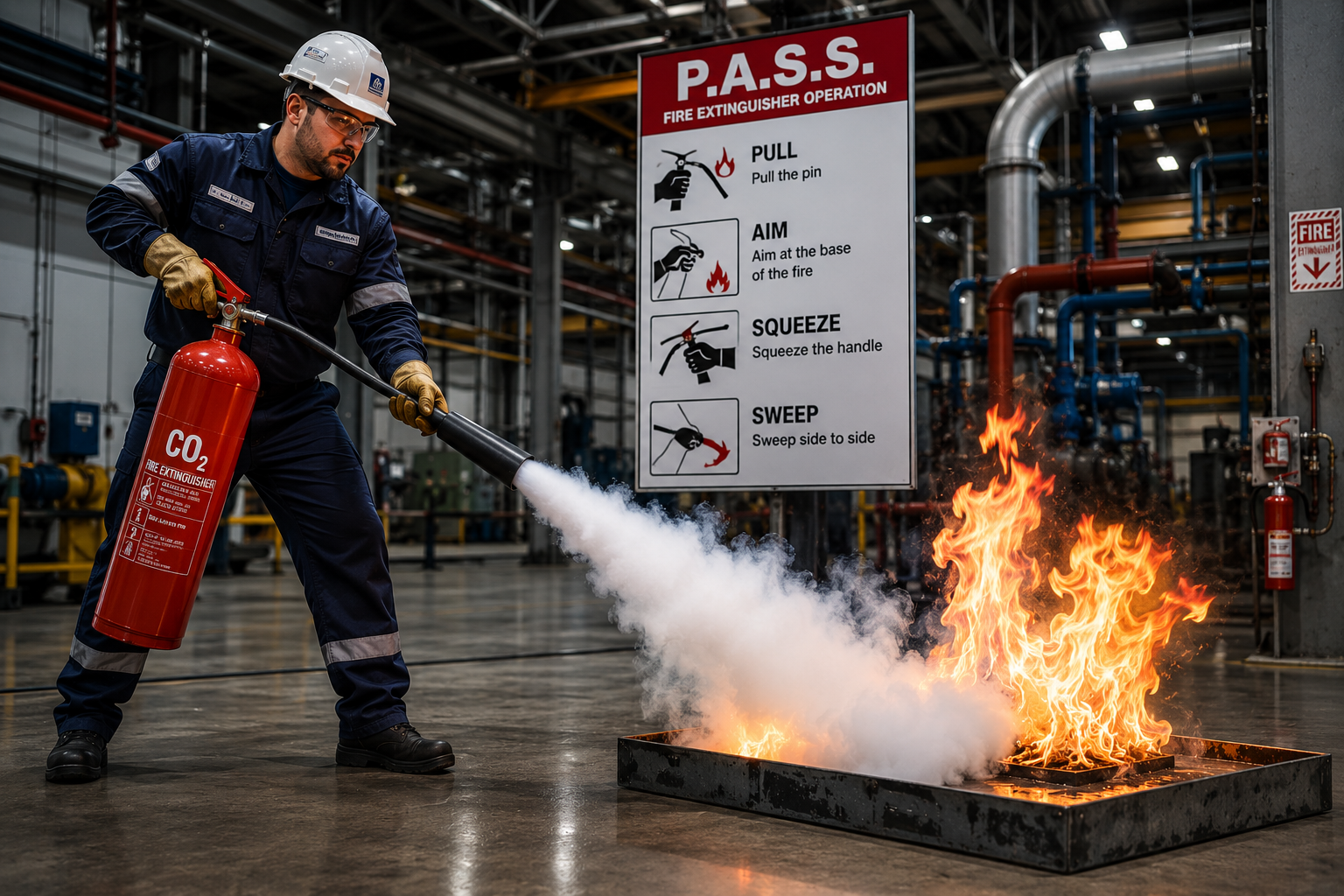
- Master Suppression Techniques: Demonstrate the safe and effective use of various extinguishers using the P.A.S.S. method (Pull, Aim, Squeeze, Sweep).
- Execute Tactical Decision-Making: Evaluate a fire's size and environment to decide whether to attempt suppression or initiate immediate evacuation.
- Navigate Protection Systems: Understand the operation of active systems (fire alarms and smoke detectors) and passive systems (fire doors and fire-rated walls).
- Conduct Safety Inspections: Use standardized checklists to perform routine inspections of fire extinguishers, hose reels, and alarm points to ensure emergency readiness.
- Lead Evacuation Procedures: Assist in a safe, orderly building evacuation and understand the specific protocols for reporting an incident to emergency services.
Topics to be discussed:
- Module 1 - Introduction To Basic Fire Prevention and Protection Course
- Module 2 - Basic Chemistry of Fire
- Module 3 - Basic Fire Prevention
- Module 4 - Basic Fire Protection
- Module 5 - Basic Fire Fighting
- Module 6 - Basic Emergency Planning
- Module 7 - Responding To an Emergency
- Module 8- Basic Fire Inspections
- Module 9- Fire Inspections - Visual Exercises
- Module 10- Conclusion
Who should attend:
- Appointed Fire Fighters
- Floor Marshals
- Electricians & Wiremen
- Mechanical Fitters
- Welder/Fabricators
- Storemen
- Warehouse Personnel
- Site Supervisors & Foremen
- Health & Safety Officers
- Maintenance Managers
Benefits of attending:
- Mastery of the P.A.S.S. method and identifying the correct extinguisher for electrical fires.
- Knowledge of "Hot Work" protocols and fire hazard identification.
- Understanding evacuation leadership and the limits of first-aid firefighting.